Reviewing the Teacher Reading Books Vector for Embroidery
As a designer who has spent years translating digital concepts into thread, I approach every new machine embroidery design with a mix of curiosity and caution. We have all been there: you download a file that looks pristine on your screen, only to find it turns into a tangled mess of bird nests and puckered fabric once it hits the hoop. Today, I am taking a close look at the Teacher Reading Books to Children Vector. This piece falls under the category of Illustrations and is marketed as versatile Graphics, but does it hold up when subjected to the mechanical realities of an embroidery machine?
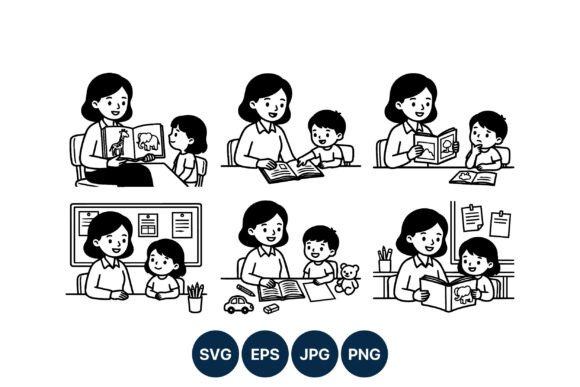
The first impression of this design is one of warmth and nostalgia. The black and white vector art depicts a woman reading to children, surrounded by books and toys in a classroom setting. It captures a specific mood—quiet engagement and educational joy. For those of us running a craft business or selling on Etsy, mood is half the battle. However, aesthetic appeal means nothing if the stitch density is too high for a baby onesie or if the details are too fine for a textured towel. Let us break down how this design performs in real-world scenarios.
Visual Clarity and Stitch Translation
The core challenge with any illustration-based embroidery file is simplification. Embroidery is not printing; we cannot rely on gradients or infinite resolution. We rely on satin stitch, fill stitch, and running stitch to create shape and shadow. The Teacher Reading Books to Children Vector features distinct lines and clear separations between the figures and the background elements like toys and books. This is a positive sign. Clear boundaries usually translate well into digitized paths, reducing the risk of thread breaks caused by excessive direction changes.
When I visualize this design on a tote bag design project, the contrast becomes crucial. Since the source is black and white, it lends itself beautifully to monochromatic stitching. Imagine using a deep navy thread on a natural canvas tote. The simplicity of the line work allows the texture of the fabric to breathe. However, if you plan to use this as an applique design, you must ensure the cut lines are clean. The interaction between the teacher and the kids involves overlapping elements. In embroidery, layering requires careful planning to avoid bulk. If the design includes dense areas where the teacher’s clothing overlaps with the books, you may need to manually adjust the stitch density in your software to prevent stiffness.
Real-World Application: From Classroom to Closet
Let us consider a practical scenario. A local preschool is holding a fundraiser, and they need branded merchandise. They want something that feels handmade and personal, not mass-produced. This is where the Teacher Reading Books to Children Vector shines. It is not just a logo; it is a scene. Placing this on a sweatshirt embroidery project creates an instant emotional connection. Parents seeing this on a teacher’s apparel or a classroom library pillow would immediately understand the value proposition: care, education, and attention.
For an Etsy seller specializing in personalized gift items, this design offers versatility. It works exceptionally well for baby embroidery projects, such as bibs or blanket corners, provided the scale is adjusted. The theme of reading is timeless. However, you must be mindful of the hoop size. If the original vector is large, shrinking it down to fit a 4x4 hoop for a baby item might cause the smaller details, like the faces of the children or the spines of the books, to merge. Always test a scaled-down version on scrap fabric before committing to the final finished product.
Another viable avenue is holiday embroidery. Think of a "Thank You" gift for educators at the end of the school year. An embroidered apron featuring this scene, perhaps paired with a simple text element if the license allows, becomes a cherished keepsake. The narrative quality of the Illustrations makes it stand out among generic apple-or-book motifs commonly found in design assets.
Navigating Fabric and Technical Constraints
While the design is charming, it is not without its technical demands. The description notes it includes SVG, PNG, and JPG files. As an embroiderer, I must remind you that these are graphic formats, not native embroidery files like PES or DST. You will need to digitize this vector or use a conversion tool, which brings us to critical considerations. Automatic digitizing often fails with complex scenes. You must manually assign stitch types.
For instance, the toys in the background should likely be rendered with simple running stitch outlines to keep the focus on the main figures. If you allow the software to auto-fill every small toy, the stitch density will skyrocket, leading to fabric distortion. This is particularly important when working with stretchy fabric like jersey knits for t-shirts. Without a proper stabilizer—likely a cut-away for durability—the design could pucker significantly.
Dark fabrics present another hurdle. Since the source art is black and white, you have creative freedom, but visibility is key. On a black hoodie, stitching the entire design in black will render it invisible unless you use texture variations like satin borders against fill interiors. Conversely, on light fabrics, you can play with thread colors to add depth. A soft pastel palette for the children’s clothes and warmer tones for the teacher can bring the Graphics to life without losing the illustrative charm.
Commercial Viability and Brand Consistency
For small shop product creators, consistency is vital. Does this design fit your brand? If your boutique focuses on minimalist, modern aesthetics, this detailed scene might feel too busy. However, if your brand leans toward whimsical, storybook, or educational themes, it is a perfect fit. The professional presentation of the vector suggests it was created with clean paths, which is a good indicator that it will digitize cleanly.
Before listing any custom apparel or embroidered patch featuring this design, you must verify the licensing. The download includes various file types, but does it grant commercial rights for physical goods? Many designers allow personal use but require an extended license for commercial commercial embroidery projects. Never assume. Check the terms explicitly to protect your business from intellectual property issues.
Final Verdict and Designer Notes
The Teacher Reading Books to Children Vector is a strong candidate for meaningful, narrative-driven embroidery projects. It excels in contexts where storytelling adds value, such as educational gifts, teacher appreciation items, and nursery decor. Its strength lies in its clear composition and emotional resonance.
To ensure success, follow these practical steps:
- Test on Scrap Fabric: Always run a test stitch-out on the same fabric type you intend to use for the final product. This reveals tension issues and density problems early.
- Check Contrast: Use black and white mockups to ensure the design remains legible without color reliance. If it looks muddy in grayscale, it will look messy in thread.
- Adjust Density: If digitizing yourself, reduce fill density in non-critical areas like background toys to save thread and reduce stiffness.
- Verify Hoop Size: Ensure the design fits your available hoops without excessive resizing that compromises detail clarity.
- Confirm Licensing: Double-check usage rights for selling handmade product items versus digital redistribution.
In conclusion, this design is more than just a pretty picture; it is a tool for connection. When handled with technical precision and creative insight, the Teacher Reading Books to Children Vector can elevate your embroidery project from a simple commodity to a cherished heirloom. Whether you are decorating a tea towels set for a classroom or creating a signature printable mockup for your online store, this asset offers the depth and character that discerning customers appreciate. Just remember: the magic happens not in the download, but in the thoughtful execution of the stitch.